

How do I love thee?
You know the line, but do you know the story?

Welcome to Story Has It where we share the human stories behind films, songs, books and more.
If you were asked to name the most famous love poem of all time, it’s possible you would think of the first line of this Elizabeth Barrett Browning sonnet: How do I love thee? Let me count the ways. It’s a line that somehow lives in our collective memory - even though most of us have never fully read it, and likely couldn’t name it.
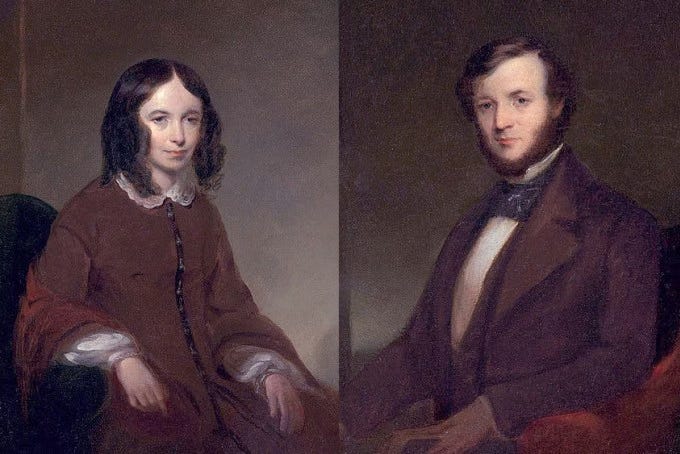
Written in 1846, it’s a poem from a collection titled Sonnets from the Portuguese that Elizabeth Barrett wrote for her, then, future husband Robert Browning, as they fell in love through letters; a literary love story if ever there was one.
It was Elizabeth that created the first spark by including a few lines of praise for Browning’s poetry in her second collection of poems. He took notice and responded with a letter, writing effusively:
“I love your verses with all my heart, dear Miss Barrett,—and this is no off-hand complimentary letter that I shall write…
Since the day last week when I first read your poems, I quite laugh to remember how I have been turning and turning again in my mind what I should be able to tell you of their effect upon me …”
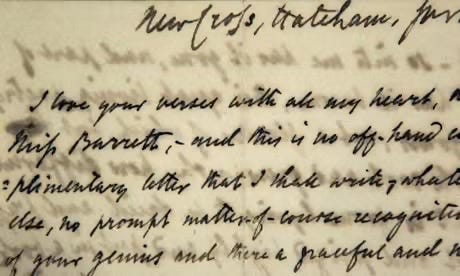
In the 20 months that followed, the poetic pair exchanged 575 letters, and having read a few, it’s hard not to be swept up in their progression; the initial giddy excitement, the doubts, and the anticipation of a long-awaited first meeting.
Elizabeth was unwell and fragile - struck down at 15 by a spinal injury and later tuberculosis which meant that she was often cooped up and behind closed doors, ‘inwards’ as she put it. She was 39 at this point and had come to believe that her best years were behind her.
And so, she kept postponing their first meeting, suggesting her condition would be better in the spring; desperately trying to manage his expectations in her letters.
“There is nothing to see in me; nor to hear in me—I never learnt to talk as you do in London…”
Their first in-person meeting came in May 1845 - after four full months of correspondence. In the letters that immediately followed Robert seemed anxious that he had overstayed his welcome, writing:
“I trust to you for a true account of how you are—if tired, if not tired, if I did wrong in any thing,—or, if you please, right in any thing . . .they all say here I speak very loud—(a trick caught from having often to talk with a deaf relative of mine). And did I stay too long?”
Elizabeth replied.
“Indeed there was nothing wrong—how could there be? And there was everything right—as how should there not be?”
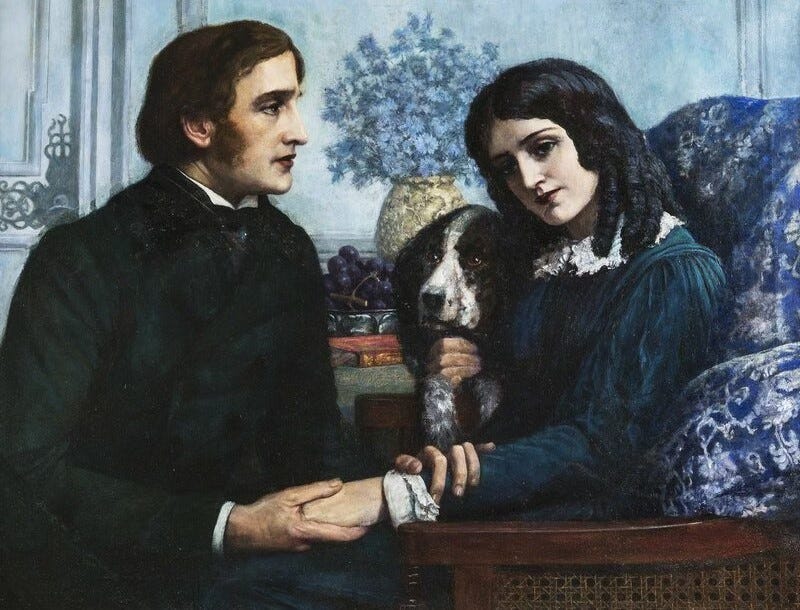
Despite this swell of feeling, there were obstacles to their pairing. Elizabeth’s father was over-bearing and opposed her marriage, and Robert’s parents worried she would become a burden to him. But then, advice from a doctor for Elizabeth to move to sunnier climes captured their imaginations.
They eloped and fled to Florence.


Sonnet 43 - now the most famous of Elizabeth’s poems - was one of a collection of sonnets she wrote in the throes of this unexpected romance, and yet she only shared them with Robert three years after their marriage. He insisted they be published. She felt them to be too personal. They eventually published them as Sonnets of the Portuguese to disguise their provenance, and make them appear to be translations.
‘My little Portuguese’ was Robert’s nickname for Elizabeth.
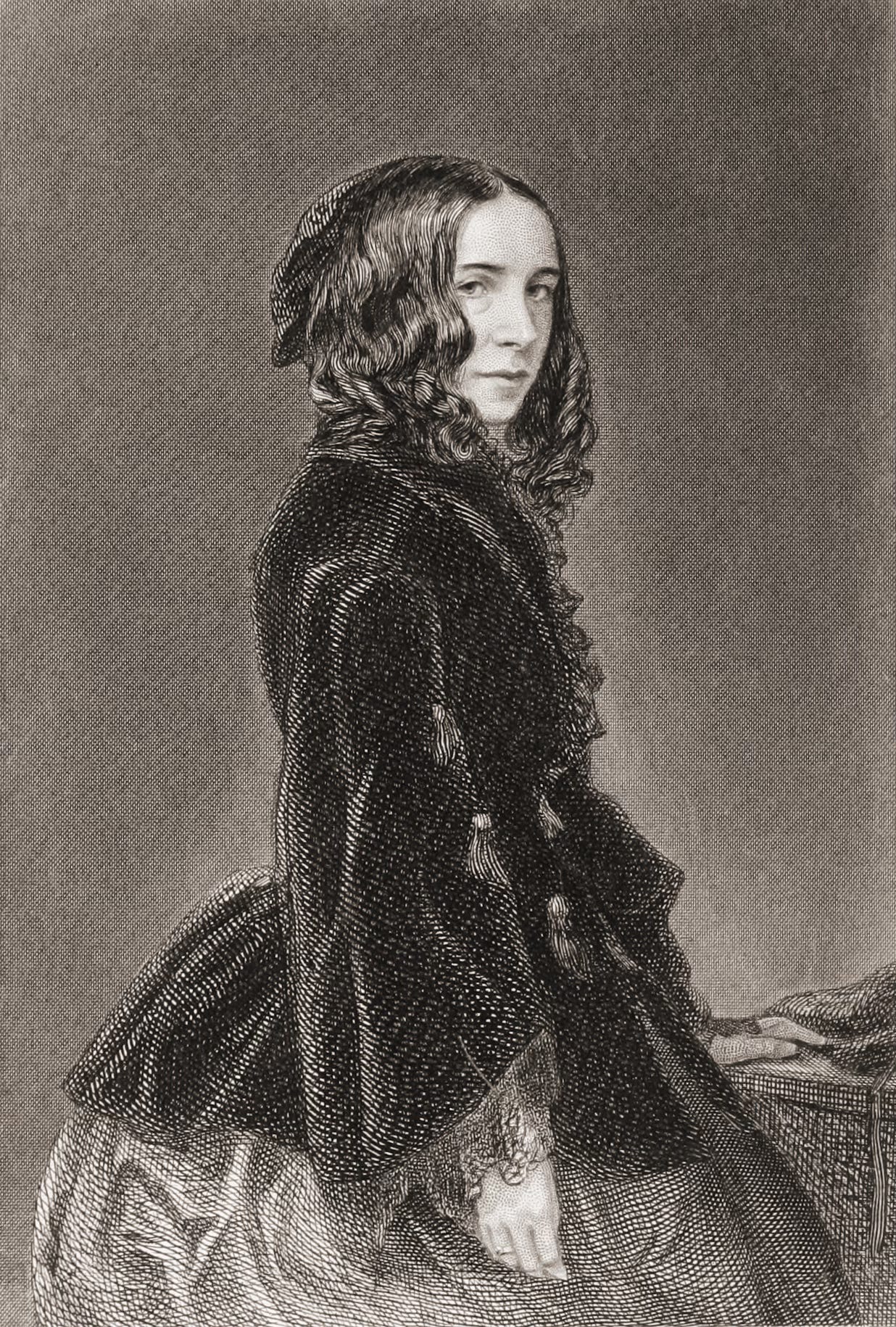
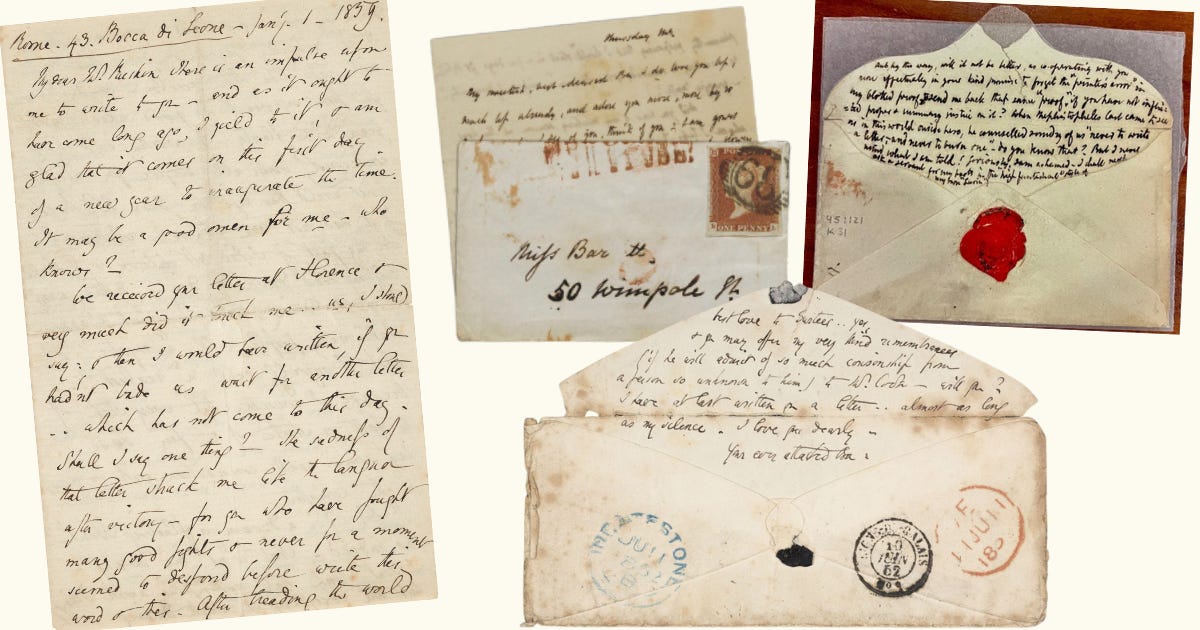
The full collection of handwritten letters have been held at Wellesley College in Massachusetts since 1930, and are now online for all to browse here (so much for privacy, Elizabeth!). The library even has the actual mahogany door to the Barrett house on Wimpole Street where Robert’s letters to Elizabeth passed through the brass letter slot. A Wellesley librarian screwed the slot shut more than 40 years ago after being overwhelmed by the stream of letters slipped through by students to pay homage to the couple.
Oh this was so achingly romantic. With Valentines Day coming up, I’m so grateful for it. I’ll be reading their letters when I can. Thank you so much!
What a love story that was! Letters are so romantic. I thinks sometimes it’s easier to express how we feel in a letter than in person.